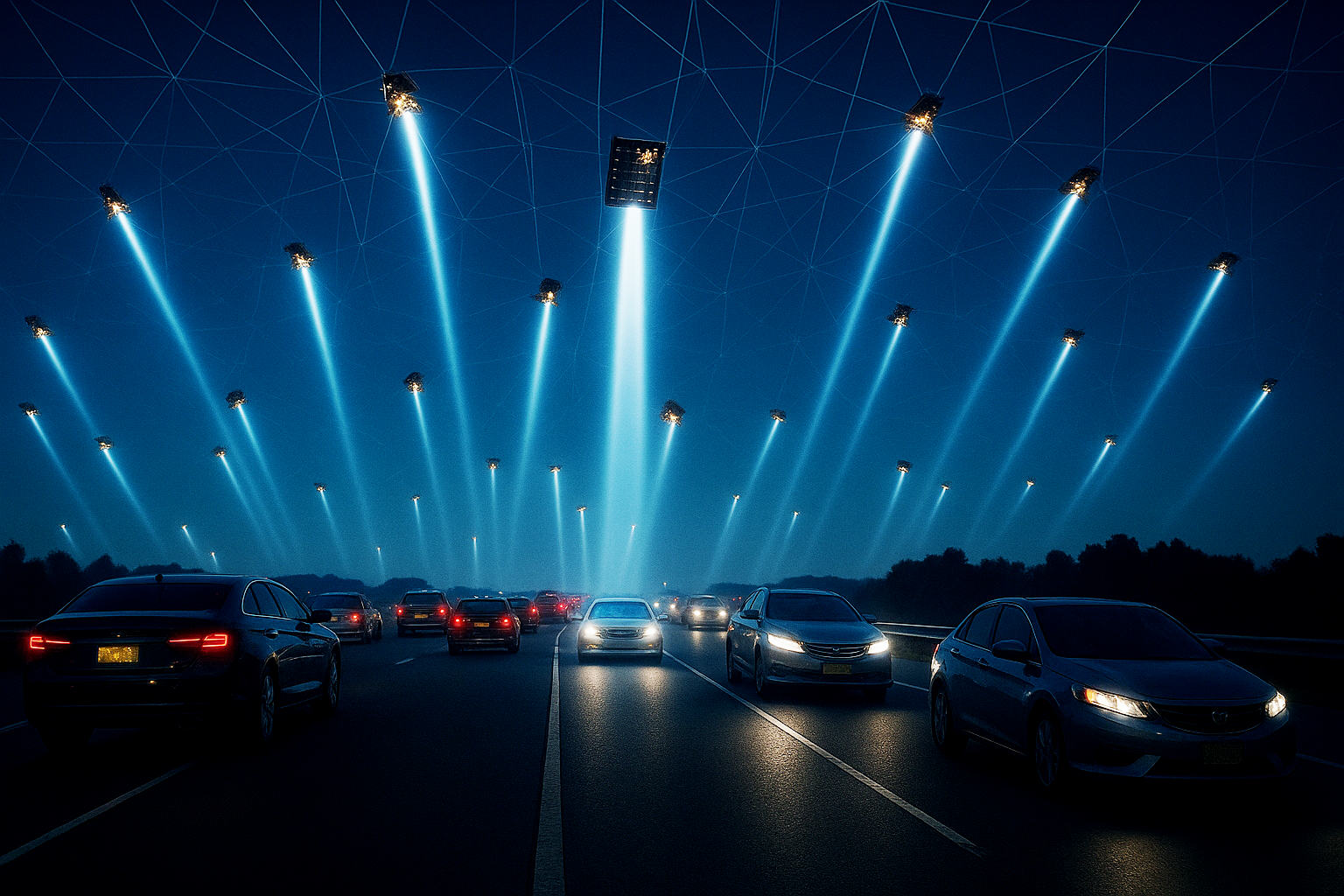
Story - 2035: The Road We Didn’t Choose
I nurse a coffee at my kitchen table in Auckland, I don't really feel like going out. It’s 2035, and I’m writing this to remember how we got here. Someone who read this in 2020 would probably label me a conspiracy nut, but I have to tell you how our roads became a web of prying eyes we can’t escape. It wasn’t sudden, you know. It crept in, stage by stage, each step feeling small, even reasonable, until one morning we woke up and every journey was watched, judged, filed away. This is my story of how tracking took over, until our lives were no longer our own.
It began in the early 2010's', the big cities rolled out ANPR plate reader networks to prevent crime and help police investigators. Then around mid-2025 came Electronic Road User Charges, or eRUC, sold as a “fairer” way to fund roads. They offered a GPS device from a company called RUCFast, promising it was cheaper than manual odometer checks for diesel cars. At first, you could still report your mileage by hand. By 2026, it was hard to find instructions on how to pay manually, then they slapped on a 20% manual processing fee. “Just get the RUC box” they said. “It’s simpler.” Many of us did. Posts on the socials about a “surveillance grid” faded into the noise.
Then came the toll roads. Yeah, the roads have to be paid for somehow. We’d always had a few, like the Northern Gateway, where licence plate cameras snapped your plate if you didn’t pay online. Alternative routes existed, but they were a slog. By 2027, new tolls appeared: State Highway 1 north of Wellington, then Christchurch. The government called it infrastructure funding, but the free routes got worse—potholes, no signs, endless delays. My mate Sarah said, “It’s like they’re herding us into those cameras.” She was right.
The creep grew with “smart cities” in 2028. Councils started using cameras to “manage traffic flow”. They put cameras on every major road, tracking plates, figuring out the matching Bluetooth ID to tweak the traffic lights. They swore the data was anonymized, but privacy warnings were already surfacing. Posts on the socials whispered that police and private firms like SafePath Solutions were linking plates to driver records. The Privacy Commissioner raised an eyebrow, but the government said it was legal. We didn’t push back enough.
By 2030, the police were deep in it. News broke that they’d been tapping ANPR networks—thousands of cameras. Not just the huge average-speed camera network, but also in car parks, petrol stations, and main streets—nearly 700,000 times a year, often without warrants. They’d even faked stolen car reports to track people because it was easier than seeking a warrant. SafePath Solutions, one of the big ANPR providers, fed police data from supermarket forecourts and malls, calling it “crime prevention.” Court challenges called it “mass surveillance,” but judges ruled it legal, saying public roads weren’t private. That opened the floodgates—ANPR wasn’t just for tolls or traffic anymore; it was a tool to watch us all.
The tipping point came in 2032 with the “Tuakana Kaitiaki” initiative. It sounded good: strong, supportive, educating, fewer accidents, catch speeders, find stolen cars. But it rated every drive for compliance: tolls, speed, payments, behavior, braking, trip patterns, associations (who you parked near). A brave few joked that they should have just called it Big Brother. Plate readers and tracking tags fed a central system, shared with police, tax authorities, employers. My friend John was flagged for “suspicious travel” after driving to a protest in Hamilton. His insurance tripled. If I accelerate firmly to merge onto the motorway, I’m taxed for “excess emissions.” The system notices everything.
One morning in 2033, it hit me. I drove to the supermarket, and my smart tag pinged: “Non-optimal route detected. Suggest alternate for compliance.” Compliance with what? I hadn’t broken any rules, but the system tracked my speed, stops, my choice to skip the tolled motorway. Cameras caught my plate at four intersections, and later, I got a council email: “Try eRUC Plus for eco-friendly routing. Reminder: $600 fine for non-compliant vehicles.” My neighbor Tane, stuck with manual RUC until it ended, he couldn’t afford his kids’ school trip to the Coromandel because the 20% manual fee, plus the “non-eco route” drained his budget. They made him choose, surrender his families dignity or his kids miss out.
Now, in 2035, it’s all connected. Every journey is monitored, cross-referenced, scored. Visiting a friend in a “high-risk” area flags me for checks. Driving up hill to your favorite lookout? Taxed for emissions. Lingering near a protest? Tagged for “association monitoring.” Non-tracking options are gone, and alternative routes are so impractical they’re a joke. The Privacy Commissioner warned this could happen, but it’s toothless against this. It was a Trojan Horse; we didn’t listen.
I write this to remember: we didn’t see the stages clearly. Each felt small—eRUC fees, toll cameras, smart city promises. But they built a cage, and one day we woke up inside, tracked, judged, controlled. I hope someone reads this and fights—before the next stage takes what’s left.